Impact of Exacerbations



For US Healthcare Professionals Only


WHAT DO YOUR PATIENTS STAND TO LOSE WITH ONE EXACERBATION?
IN COPD
PERMANENT
LOSS OF LUNG
FUNCTION9
IN ASTHMA
SIGNIFICANT LIFE
DISRUPTIONS10,11
IN COPD
PERMANENT LOSS
OF LUNG FUNCTION9
IN ASTHMA
SIGNIFICANT LIFE
DISRUPTIONS10,11
Exacerbations were defined as those leading to treatment with respiratory medications such as systemic corticosteroids and that lead to at least one outpatient visit, emergency department visit, or an inpatient stay of ≤1 day.9,10
- COPD
- Asthma
IN COPD, Lung Function May Not Fully Recover After a Moderate Exacerbation9
Post hoc analysis—WISDOM Study*
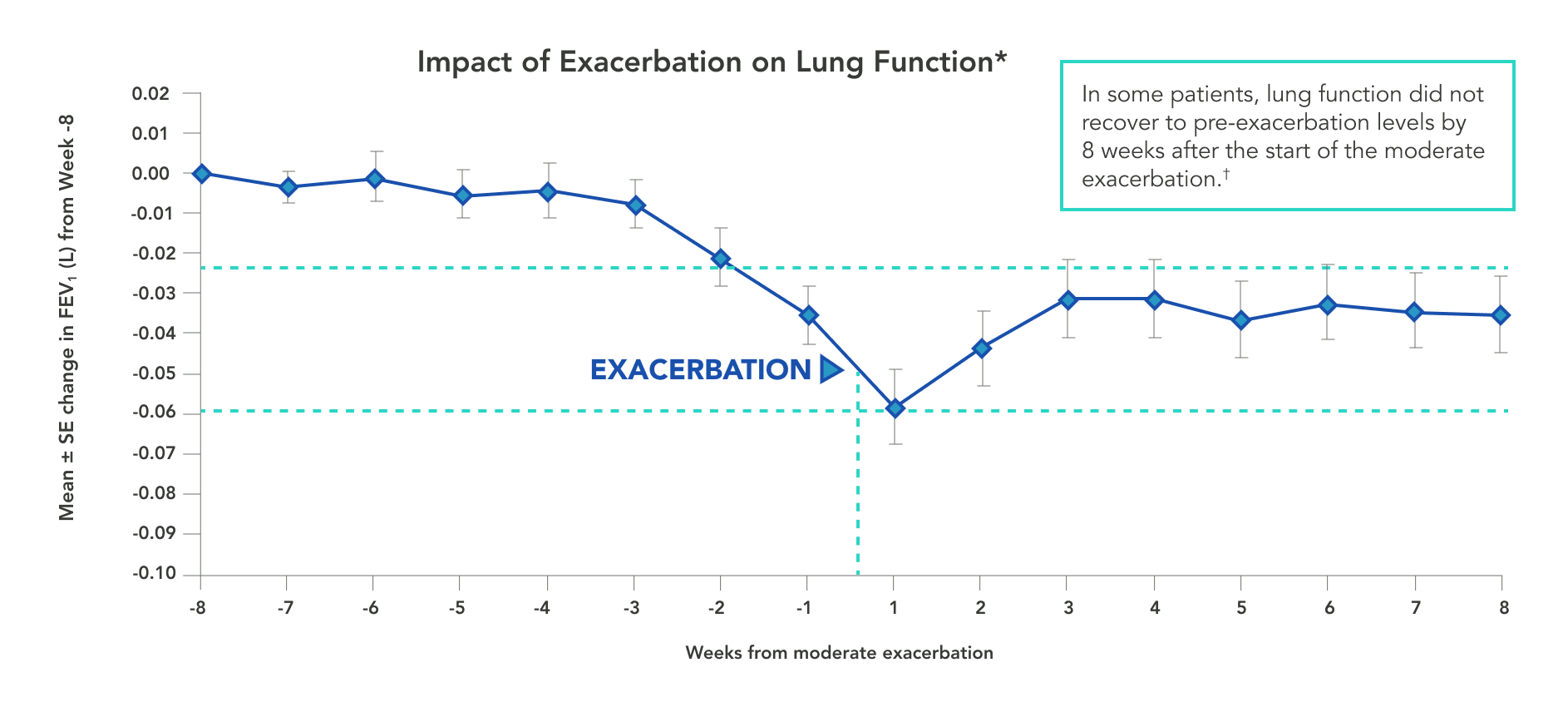
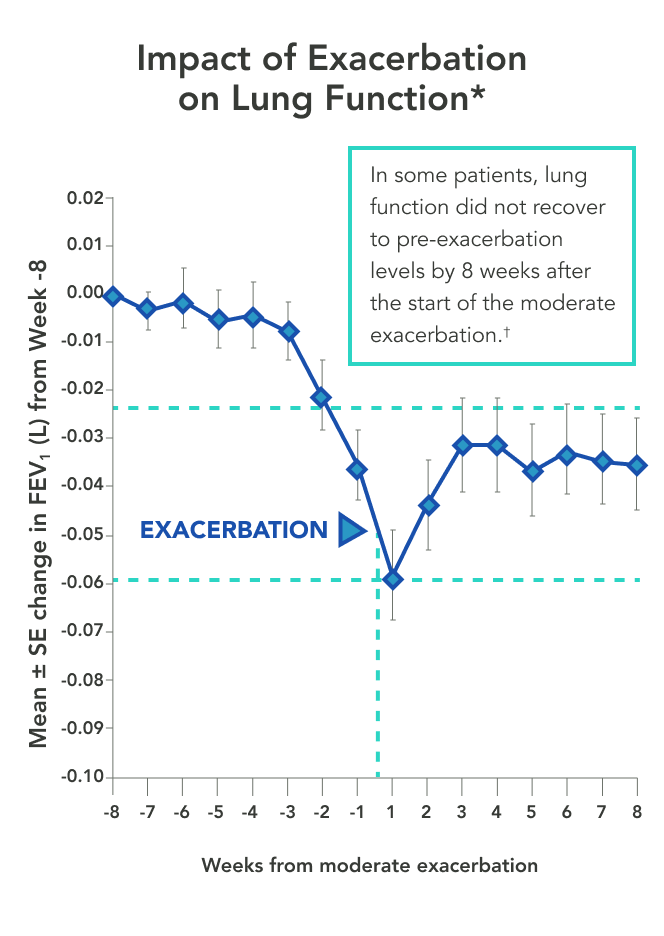
*Post hoc analysis of the WISDOM study in 317 patients with severe to very severe COPD to characterize lung function before, during, and after a moderate COPD exacerbation.
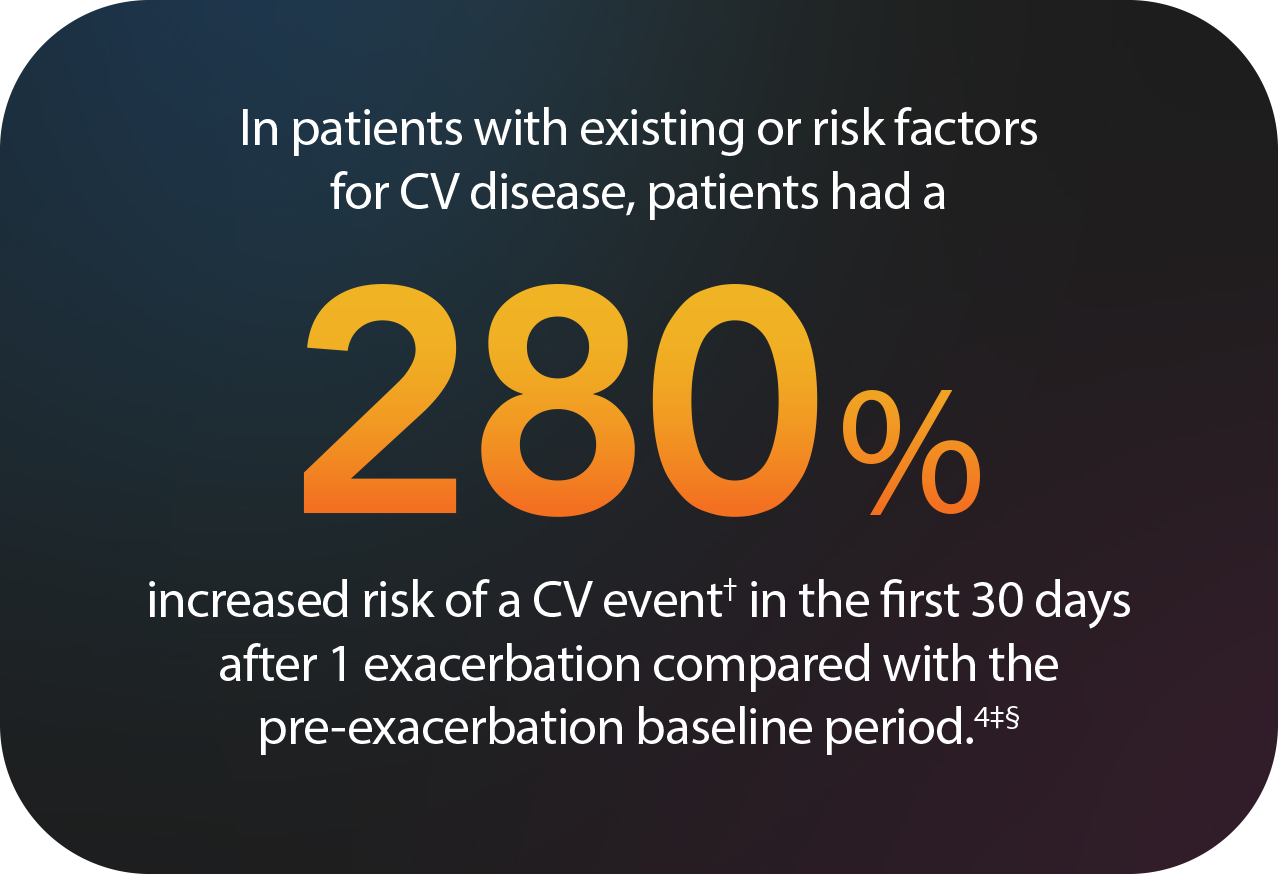
†Moderate exacerbation was defined as an increase of ≥2 lower respiratory tract symptoms related to COPD or the onset of two or more new symptoms.9
‡Patients with no current exacerbation, who have a previous exacerbation history with a positive response to ICS/LABA, and a high symptom load.5
§ICS/LAMA/LABA.



References
1. Suissa S, Dell’Aniello S, Ernst P. Long-term natural history of chronic obstructive pulmonary disease: severe exacerbations and mortality. Thorax. 2012;67(11):957-963. doi:10.1136/thoraxjnl-2011-201518
2. Mackay AJ, Kostikas K, Murray L, et al. Patient-reported outcomes for the detection, quantification, and evaluation of chronic obstructive pulmonary disease exacerbations. Am J Respir Crit Care Med. 2018;198(6):730-738. doi:10.1164/ rccm.201712-2482CI
3. Hughes R, Rapsomaniki E, Janson C, et al; NOVELTY study investigators. Frequent productive cough: symptom burden and future exacerbation risk among patients with asthma and/or COPD in the NOVELTY study. Respir Med. 2022;200:106921. doi:10.1016/j.rmed.2022.106921
4. Moretz C, Hahn B, White J, et al. Symptom burden and GOLD classification in medicare advantage patients with COPD initiating umeclidinium/vilanterol or fluticasone propionate/salmeterol therapy. Int J Chron Obstruct Pulmon Dis. 2020;15:2715-2725.
5. Global Initiative for Chronic Obstructive Lung Disease. Global strategy for the diagnosis, management, and prevention of chronic obstructive pulmonary disease (2026 report). Accessed May 2026. https://goldcopd.org/wp-content/uploads/2024/11/GOLD-2025-Report-v1.0-15Nov2024_WMV.pdf
6. Miller MK, Lee JH, Miller DP, Wenzel SE; TENOR Study Group. Recent asthma exacerbations: a key predictor of future exacerbations. Respir Med. 2007;103(3):481-489. doi:10.1016/ j.rmed.2006.07.005
7. Portacci A, Pelaia C, Bagnasco D, Paoletti G, Nolasco S, De Paulis A. Lung function decline in asthma: mechanisms, risk factors, and clinical implications for personalized management. J Allergy Clin Immunol Pract. 2026;12:S2213-2198(26)00142-X. doi:10.1016/j.jaip.2026.01.043
8. Global Initiative for Asthma. Global strategy for asthma management and prevention, 2026. Updated May 2026. Accessed May 20, 2026. https://ginasthma.org/wp-content/uploads/2026/05/GINA-2026-Strategy-Report-WMS.pdf
9. Watz H, Tetzlaff K, Magnussen H, et al. Spirometric changes during exacerbations of COPD: a post hoc analysis of the WISDOM trial. Respir Res. 2018;19(1):251. doi:10.1186/ s12931-018-0944-3
10. Centers for Disease Control and Prevention (CDC). Most recent asthma data. Updated November 21, 2024. Accessed April 20, 2026. https://www.cdc.gov/asthma-data/about/most-recent-asthma-data.html
11. American Lung Association. Asthma trends and burden. Updated July 15, 2024. Accessed March 30, 2026. https://www.lung.org/research/trends-in-lung-disease/asthma-trends-brief/trends-and-burden